
Voices
Safe Drinking Water Is a Basic Human Right That Texas Prisons Fail to Respect
Imprisoned people are forced to drink and bathe with water they describe as over-chlorinated, slimy, and foul-smelling.
This article was originally published by Truthout.
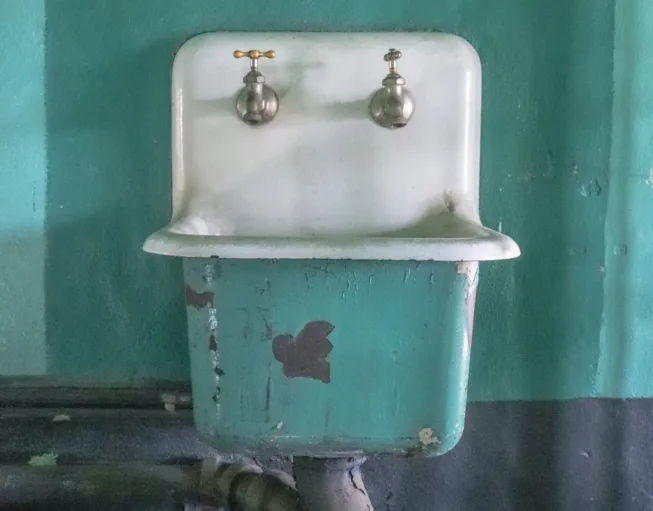
A recent report from the Texas Civil Rights Project reveals widespread and longstanding failures in the Texas Department of Criminal Justice’s (TDCJ) provision of safe drinking water to those incarcerated in state prisons. People are forced to drink and bathe with water they describe as over-chlorinated, slimy, and foul-smelling. The only source of water within most of their cells is a small sink that sits atop a toilet. This water is used for drinking, bathing, cooking, and keeping cool from the heat. To cope, many people trade tips on filtering the water through clothes or pieces of bedsheet, but even this practice hardly helps.
The TDCJ Coffield and Michael Units in Tennessee Colony, Texas, house nearly 8,000 people combined and share a single water treatment system. At these units, it’s common knowledge: Don’t drink the tap water. Many have directly attributed stomach infections, skin conditions, and even cancer diagnoses to their long-term reliance on this water. Some have said that staff, including certain doctors, have cautioned them to avoid the tap water and to drink bottled water whenever possible — but that solution is of no help to those in TDCJ who cannot afford the high price of bottled water in prison commissaries.
For the many individuals who have chronic medical conditions, their concerns about the safety of the water they are consuming is a source of heightened stress. They repeatedly described in detail the physical, mental, and financial toll caused by not knowing whether their drinking water is safe to consume.
One man, who wished to anonymously share his experiences of incarceration at the Coffield Unit, told the Texas Civil Rights Project, “I could tell that they were flooding the water with too much chlorine to kill whatever was in it. Most of the medical [staff] don’t want us tested for H. pylori, they say it is gas or heartburn. I’ve written over three grievances about the water. Nothing yet has been done by the people above to make water safe.”
He reported repeated severe gastrointestinal illness over multiple years, confirmed by multiple positive H. pylori tests while at Coffield. The infections caused persistent acid reflux and ulcers. Others who had been diagnosed with H. Pylori infections described gastrointestinal issues such as stomach pain, bloating, diarrhea, polyps, and abdominal hernias. He detailed repeated delays and failures by TDCJ medical staff to properly test or treat him, multiple mishandled lab samples, and contradictory medical advice. He noted that boil water notices are not posted even when the water pressure drops; that guards receive bottled water and have access to filtered water while incarcerated people do not; and that he cannot afford bottled water from the commissary.
While TDCJ is responsible for operating many of the water systems that treat and supply water to TDCJ prison facilities, it is the Texas Commission on Environmental Quality (TCEQ) that is responsible for enforcing environmental laws in Texas, including those governing public drinking water.
As the state’s environmental oversight agency, TCEQ is authorized to regulate all public water systems in Texas, and it conducts both routine and responsive compliance monitoring, including enforcement of the Safe Drinking Water Act. TCEQ is required to conduct physical, on-site inspections of public water systems every three to five years. However, TCEQ relies on water systems’ operators’ self-reporting for bacteriological samples and allows TDCJ discretion in selecting sample sites in and around the prison compound.
In investigating water conditions in TDCJ facilities, the Texas Civil Rights Project sought information from both TDCJ and TCEQ. We relied on Texas Public Information Act requests, and while TCEQ was cooperative in response to our requests, TDCJ was not. We also consulted TCEQ’s searchable online database, the Texas Drinking Water Watch, which offers real-time access to monitoring results, violation histories, and enforcement actions. Through TCEQ records, the Texas Civil Rights Project was able to identify compliance investigations surrounding outstanding violations, and whether those violations had been marked as resolved.
Even with TCEQ’s relative openness, information was rarely available as to how a violation was resolved. On the other hand, TDCJ obfuscated relevant information. When it did provide information, it was disorganized and inconsistent. Still, the information did provide important insights into the conditions of the water system used by the Coffield and Michael Units.
We learned that since 2020, the water system has racked up 22 distinct drinking water violations, including microbial contamination, exceedances of cancer-linked disinfection byproducts, prolonged infrastructure failures, and repeated breakdowns in basic monitoring and reporting obligations. Two of the 22 violations were health-based violations. For comparison, in 2024, 95 percent of Texas water systems were in compliance with health-based standards.
Under the Safe Drinking Water Act, water systems managed by TDCJ are supposed to meet the same standards as any public utility. However, due to gaps in transparency and oversight of TDCJ-operated water systems, TDCJ seems to operate with impunity in its provision of water to prisoners. When violations of federal or state law occur, TDCJ often delays reporting, and in some cases, has taken years to return to compliance, if at all. This is completely unacceptable.
Access to clean water is a basic human right. Our tax dollars support this system, with Texas pouring billions into operating prisons. TDCJ must guarantee clean, safe water for every person incarcerated in its prisons.