
Trump’s Crackdown on Dissent Comes for Minnesota Anti-ICE Organizers
Federal prosecutors charged 15 people with conspiracy, painting their political speech, protest activity, and alleged antifa ties as evidence of criminal wrongdoing.
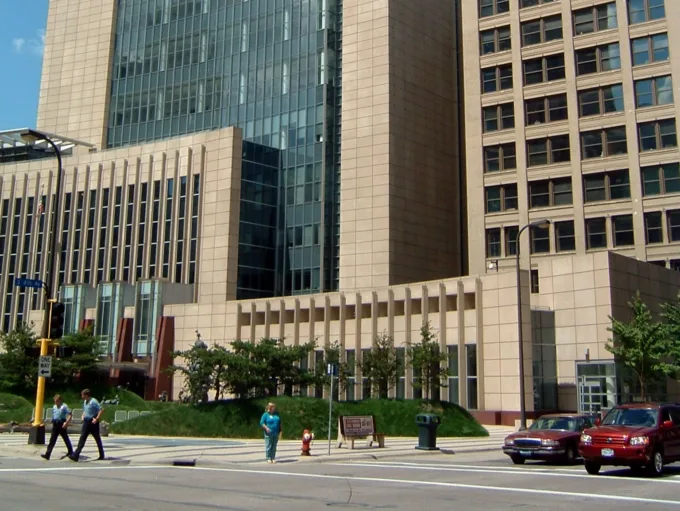
The Department of Justice (DOJ) has charged 15 Minnesota residents with conspiracy to impede or injure a federal officer after they participated in protests against ICE’s mass deportation campaign in the Twin Cities.
The indictment, which was unsealed last week, is the latest attempt by the Trump administration to criminalize its opponents.The case tests how far prosecutors can go to manufacture a criminal conspiracy based on group chats, social media posts, discussions of protest tactics, and anti-surveillance precautions.
In the indictment, the DOJ appears to argue that involvement in rapid-response networks is illegal because they “identify and harass” federal agents to prevent them from “performing their official duties.” Rapid-response networks alert community members to ICE’s presence so volunteers can monitor, protest, and film officers’ actions—all activities that are protected by the First Amendment, despite the administration’s assertions to the contrary.
The administration called the indictment a “crushing blow” to the “Antifa Terrorist Network.” Antifa is not a single membership organization with a centralized leadership structure, and legal experts have questioned the administration’s effort to treat it as a domestic terrorist organization.
While the indictment is among the most sweeping attacks on anti-ICE activists to date, the Trump administration has repeatedly attempted to criminalize First Amendment activities. Since Trump’s second term began, the DOJ has charged dozens of people in connection with alleged anti-ICE activity, including judges and staff at a medical clinic.
In Minnesota, some of the most serious allegations appear to involve Kyle Wagner, who is charged with conspiracy to impede or injure a federal officer, solicitation to commit a crime of violence, and interstate threats.
“We’re not talking about peaceful protests anymore,” he allegedly said in a video posted on Instagram on Jan. 24, 2026. “Get your ******* guns and stop these f****** people.”
The DOJ had already charged Wagner in February with making federal threats and cyberstalking. In both the February press release and the most recent indictment, the DOJ quotes from the January 24th social media post.
Another defendant is accused of kicking an ICE vehicle and another with assaulting an officer with her car. Federal prosecutors have repeatedly accused protesters and others of using their vehicles to attack federal agents; in some instances, surveillance footage has disproven their claims.
There are no victims named in the indictment. Federal agents, however, shot and killed two Minnesota residents, Renee Good and Alex Pretti; no charges have been brought against their killers.
Local activists and unions lambasted the DOJ’s indictment against community members, several of whom are union members, according to a report in Workday Magazine.
“Trade unionists active in worker assemblies are among those who were arrested,” Kieran Knutson, president of Communications Workers of America Local 7250, told Workday Magazine. “They are outstanding union activists in their union and workplace, and I’m proud to know all of them.”
The indictment includes a Signal message allegedly written by Macalester College professor Erik Davis where he asked people with “connections to AFL-CIO leadership or decision-makers, [to] PLEASE ASK THEM TO FOCUS ON WHIPPLE AND NOT DOWNTOWN.”
Prosecutors say Davis moderated organizing meetings, and said he is an anarchist. They also allege that he attended an anti-ICE rally where other people wore “‘Antifa’ branded sweatshirts.”
Another defendant is accused of being part of a Signal group, writing a first-person account of an anti-ICE protest for an anarchist blog, and helping to maintain a database of license plate numbers belonging to vehicles used by ICE.
Last September, President Trump signed an executive order designating antifa—a decentralized anti-fascist movement—a domestic terrorist organization. (The U.S. does not have a federal domestic terrorism law, meaning the executive order had no legal effect.) An accompanying factsheet singled out anti-ICE protesters.
That same week, Trump released a memo, known as NSPM-7, that declared the “common threads animating this violent conduct” are “anti-Americanism, anti-capitalism, and anti-Christianity; support for the overthrow of the United States Government; extremism on migration, race, and gender; and hostility towards those who hold traditional American views on family, religion, and morality.”
U.S. Attorney Daniel Rosen referenced the memo when he announced the charges against the Minnesota protesters. As evidence of the defendants’ criminal activities, Rosen displayed a Facebook post from one of the accused that said, “We need to become ungovernable.”
Both the executive order and memo “are ungrounded in fact and law,” wrote Faiza Patel, a senior director at the Brennan Center for Justice, shortly after they were published.
“Acting on them would violate free speech rights, potentially threatening any person or group holding any one of a broad array of disfavored views with investigation and prosecution,” she wrote.
Such warnings have not deterred the DOJ from executing Trump’s agenda.
After the president issued his Executive Order, then-Attorney General Pam Bondi laid out the agency’s plan for implementing his directive in a memo entitled, “ENDING POLITICAL VIOLENCE AGAINST ICE.”
“The charging priorities directed by this memorandum are not limited to those criminals who are caught red-handed committing acts of violence against ICE facilities and personnel,” she wrote. “The Department of Justice will arrest and prosecute to the fullest extent of the law every person who aids, abets, or conspires to commit these crimes, whether through funding, coordination, planning, or other means.”
In October, the Board of Immigration Appeals—made up entirely of Bondi-appointed judges—deported Emmy award-winning journalist Mario Guevara. The government had argued that he was a danger to the community because he had live-streamed ICE officers arresting immigrants. After more than 100 days in detention, many of which were spent in solitary confinement, Guevara was deported to El Salvador. He had fled El Salvador more than 20 years earlier to escape persecution for his reporting.
In March, a Texas jury convicted eight anti-ICE protesters of providing material support to terrorists in connection with a protest outside an immigration jail. Prosecutors argued that the defendants’ use of the encrypted messaging service Signal and wearing all-black at the protest proved that they were members of an “Antifa cell.”
However, many of the DOJ’s prosecutions have crumbled. In Minnesota, charges against dozens of protesters arrested during “Operation Metro Surge” —when thousands of federal agents flooded the state—have been dropped, according to local outlet KARE.
In November, a Washington, D.C. jury acquitted Sean Dunn, better known as the “Sandwich Guy,” of misdemeanor assault. Federal prosecutors filed the misdemeanor charge after they had failed to persuade a grand jury to indict Dunn on felony assault for throwing a Subway sandwich at a Customs and Border Protection (CBP) officer.
“F*** you! You f***ing fascists! Why are you here?” Dunn allegedly yelled before throwing the sandwich. “I don’t want you in my city.”
In October, the DOJ charged Marimar Martinez and Anthony Ian Santos Ruiz for allegedly using their cars to hit and box in a federal agent’s vehicle in Chicago during “Operation Midway Blitz.” Prosecutors claimed CBP agent Charles Exum then shot Martinez five times to defend himself.
“This morning, Border Patrol law enforcement officers were ambushed by domestic terrorists that rammed federal agents with their vehicles,” the DOJ said in its press release after the shooting.
Less than two months later, the court dismissed all charges. Video of the incident shows the DOJ’s account was false. Exum’s vehicle was not hit or boxed in; the agent appears to swerve into Martinez’s car before getting out of his vehicle and shooting her. Text messages revealed that Exum later bragged about the shooting.
In another high-profile case from Chicago, prosecutors dismissed all charges against a group of anti-ICE protesters known as the Broadview Six. The prosecutors presented the case three times to the grand jury before securing an indictment. A partially released transcript of the second proceedings reveals that a juror was dismissed for opposing the prosecutions.
“I heard this case like last week and I thought it was a crock of s— then and I still think it is,” the juror said before he was dismissed.
Trump’s persecution of protesters extends beyond anti-ICE activists. Earlier this year, the DOJ brought fraud and money-laundering charges against the civil rights organization, Southern Poverty Law Center, which has spoken out against his policies, in connection with the group’s efforts to monitor white supremacists and other right-wing extremists. The Trump administration has also detained and tried to deport several pro-Palestine students. In a Truth Social post in 2025, Trump wrote, in an apparent reference to pro-Palestine student activists, “Agitators will be imprisoned/or permanently sent back to the country from which they came.”
While courts have thwarted some of the administration’s attempts to imprison the president’s critics, even failed prosecutions help to deter dissent and upend activists’ lives in irreparable ways.
“The point of cases like this is the financial and psychological torture,” Kat Abughazaleh, a former congressional candidate and one of the Broadview Six, said at a press conference after the charges were dropped. “That is what this government is trying to do. We didn’t deserve this, and no one deserves this.”