
He Was Arrested for Unpaid Court Fees. He Was Dead 48 Hours Later.
Todd Sidesinger was taken to Pennsylvania’s York County Prison for unpaid fees. His family says the jail’s medical neglect led to his death just two days later.
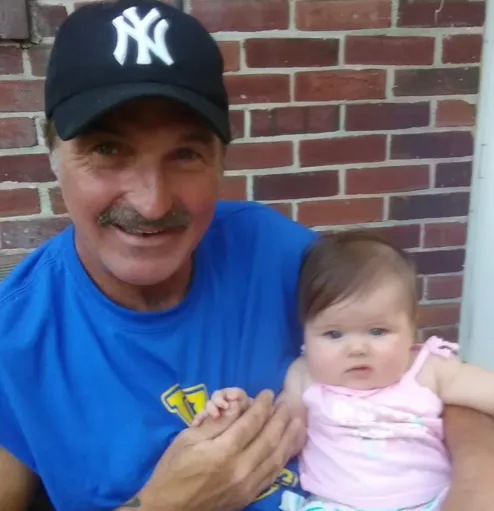
Three days after Todd Sidesinger was released from the hospital for heart failure in February 2024, he was taken to jail for unpaid court costs and fees, totaling about $1,500. Within 48 hours, he would be dead.
Sidesinger wore a prescribed defibrillator vest that delivers an electrical shock when it detects a life-threatening heart rhythm. The vest has to be charged approximately once every 24 hours. But York County Prison’s (YCP) medical staff never charged his vest, according to a wrongful death suit filed by his sister, Vicki Sidesinger, against PrimeCare, the jail’s for-profit medical provider, several of its employees, York County, the warden, and others.
The defendants have denied all wrongdoing. The County, as well as one of the nurses named in the complaint, have asked the Court to dismiss the case, which remains pending. PrimeCare and York County did not respond to a request for comment.
Sidesinger’s death shines a light on a grim reality in jails across the United States. Unaware of court debts—or unable to pay them—thousands of people are incarcerated in dangerous jails where their health, safety, and lives are at risk.
In 1983, the U.S. Supreme Court ruled that a person can only be incarcerated for unpaid court costs if they have “willfully refused to pay.” But most states, including Pennsylvania, do not require a hearing to determine why payments were not made, according to the National Center for Access to Justice.
Courts can impose fees on people in the adult and juvenile legal systems for anything from appointed counsel to supervision and electronic monitoring to drug testing—and even their own incarceration (typically known as “pay-to-stay” fees).
While there is no available data on the number of people who are incarcerated for unpaid fines and fees, case studies have exposed the prevalence of the issue. A 2023 study revealed that between 2005 and 2018, about 38,000 people in Texas and approximately 8,000 Wisconsin residents were jailed each year for failure to pay.
In Pennsylvania, one study found that from 2008 to 2018, the state’s trial courts charged defendants more than $3.68 billion in fines, fees, and restitution. Judges imposed fees in more than 99 percent of all cases. An investigation conducted by The Appeal revealed that in 2016 alone, more than 4,500 cases resulted in jail time in Pennsylvania for unpaid fines and fees. An online portal maintained by the York County Sheriff’s Office lists more than 450 active warrants for unpaid fines, some dating back to the 1990s.
In Sidesinger’s case, he owed about $1,500 for fees related to two 2008 misdemeanor convictions, according to court records. He was charged fees for, among other things, “automation,” “filing of miscellaneous papers,” and a “constable fee.”
Vicki says her brother didn’t even know he had unpaid court costs. If he had, he would have paid them, she said.
The last time she saw her brother was about two weeks before his death.
“Either Holly or I took him to his doctor’s appointments and hospital appointments,” she told The Appeal, referring to her wife, Holly Cellitti-Sidesinger. “He was just very anxious about the whole situation.”
Sidesinger had a history of congestive and acute heart failure and myocardial infarction (also known as a heart attack), among other ailments. After he was diagnosed as being at high risk of sudden cardiac death, doctors prescribed him the defibrillator vest.
“He was really afraid of dying,” Vicki said. “He wore that life vest always. He wouldn’t be without it.”
On February 14, 2024, Sidesinger was hospitalized with heart failure. Doctors inserted two stents in his heart and released him the next day. Cellitti-Sidesinger picked him up from the hospital. The doctors were optimistic about his prognosis, she said.
Three days later, on February 18, the police arrested Sidesinger and booked him into York County Prison (YCP).
The complaint says that during his intake at the jail, a PrimeCare employee recorded that Sidesinger was wearing a “heart monitor” that would “need charged (sic) when running low.” The next day, Sidesinger submitted a medical request, stating that he was experiencing chest pain and a toothache, with pain that “radiates to his entire jaw,” according to the complaint.
An EKG showed Sidesinger was experiencing a type of irregular heartbeat called Premature Ventricular Contractions (PVCs), but the nurse practitioner concluded that the results were normal, according to the complaint. She gave him acetaminophen for his toothache and sent him back to his cell.
The complaint says that in the coroner’s subsequent report on the case, she wrote that PVCs “can be life-threatening, especially if the patient is having chest pains as this decedent was having at the time.”
The next morning, at about 5:25 am, Sidesinger returned to the medical unit and told the nurse on duty that he was experiencing chest pain on his left side and a toothache, according to the complaint. Like the first nurse, she sent him back to his cell. (This same nurse has been named in several other lawsuits alleging medical neglect; she has told The Appeal she is no longer working at the jail.)
She wrote in her notes that Sidesinger had a “Cardiac Monitor” that needed to be charged, but one was not available. from home that needs to be charged,” she wrote in her notes, according to the complaint. “No charger available.”
Ten minutes later, he was found unconscious on the floor of his cell. He was taken to the hospital and declared dead.
The last nurse who saw him wrote in his chart, after his death, that he “returned to his location in stable condition.”
A family member, who worked at the hospital, called Vicki to tell her that Sidesinger had died. When they called the hospital for more information, the staff directed them to contact the jail. Up until that point, they had no idea he had been incarcerated.
“I just fell apart,” Vicki said. “I just couldn’t believe that it happened.”
Other lawsuits against PrimeCare have accused its medical staff in York County and other jails of neglecting the needs of vulnerable patients. In 2018, Everett Palmer, Jr. was booked into YCP on an old DUI charge. As his mental health deteriorated, “no corrections officer or PrimeCare employee ever attempted to get Mr. Palmer the help he so obviously needed,” according to a suit filed by Palmer’s family. York County settled the suit for $1 million dollars, and PrimeCare paid the family $500,000.
In 2023, Haywood Dixon repeatedly told medical staff and guards that he felt ill. When he couldn’t comply with officers’ demands, they tased him, put him in a restraint chair, and then left him in a cell by himself, according to a grand jury report on the case. Shortly afterwards, he told a nurse he could not breathe, but she took no action. When a sergeant asked the nurse to check on him, she refused and told him that Dixon was an “asshole.” He died shortly thereafter.
In another case, Willie Cunningham was detained at YCP when he began to experience excruciating abdominal pain. One nurse told him he had heartburn; another said he had a stomach virus. When he was finally taken to the hospital, almost a week after his symptoms began, his appendix had burst and he had developed sepsis.
Last year, the county dropped its contract with PrimeCare and switched to another for-profit company, Mediko, saying that the move would save taxpayers money and improve patient care.
Vicki says she hopes her lawsuit can help prevent another tragedy.
“I want those nurses to lose their license,” she told The Appeal. “It’s just about them being accountable for what they did and not letting this happen to another family.”
At the time of his death, Sidesinger was working at a recycling plant in York, Pennsylvania. When the company learned about his death, they played his favorite band, Kiss, on the loudspeakers to honor him, Cellitti-Sidesinger, Vicki’s wife, told The Appeal. Sidesinger was a “number one Kiss fan” and an “awesome guitar player.”

“Everyone was just devastated that he was gone,” she said. “He had a way of just making everyone laugh, like you could be so mad at him for something, but then he turned around, made you laugh, and it was okay.”