
After More Than 20 Years in Prison, Georgia Man Wins New Trial in “Shaken Baby” Case
A Georgia judge ordered a new trial for Danyel Smith, who was convicted of a crime that may have never occurred.
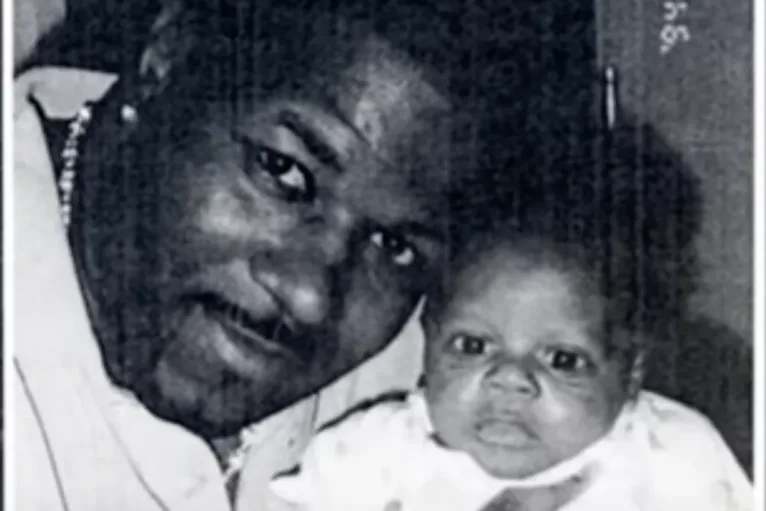
A Georgia court has ordered a new trial for Danyel Smith, a father who was convicted of killing his two-month-old son, Chandler, more than twenty years ago. Prosecutors relied on a diagnosis of Shaken Baby Syndrome (SBS) to secure his conviction. In recent years, scientific evidence has emerged calling into question the basic assumptions behind the hypothesis.
In her decision, Gwinnett County Superior Court Judge Kimberly A. Gallant ruled that the evolving research into SBS, also known as Abusive Head Trauma (AHT), constitutes new evidence that was not known at the time of trial.
“Mr. Smith’s evidence is not based on historical facts or eyewitness testimony, but on expert analysis grounded in the application of evolving scientific knowledge,” Gallant wrote in her decision.
Medical experts for the defense have concluded that Chandler was not the victim of abuse.
The defense experts surmise that on the day he fell unconscious, he had a seizure, went into respiratory distress, and stopped breathing. This was at least the second seizure Chandler, who was born five-weeks premature, had experienced, according to Smith’s legal filings. When he was less than two weeks old his mother called 911 and reported that he was breathing strangely and appeared to be having a seizure. The responding paramedics dismissed her concerns. (Smith was not home at the time.)
The expert opinions underlying his motion for a new trial, the judge wrote, “are informed by research advancements in medicine, scientific developments, peer-reviewed literature, and evolving medical standards.”
At the time of Smith’s trial, there was largely a consensus among the scientific and legal communities about the veracity of SBS/AHT. But in the decades since, exonerations and studies have revealed that the so-called triad of symptoms associated with SBS/AHT—bleeding around the eyes, bleeding between the skull and brain, and brain swelling—can be caused by strokes, short-distance falls, childbirth trauma, and disease.
What was once considered to be virtually unassailable evidence of abuse is now, in the words of one New Jersey judge, increasingly understood to be “akin to ‘junk science.’”
On April 29, 2002, Smith was driving his eight-week-old son, Chandler, to a benefits office so that his partner could apply for food assistance. On the ride over, Smith looked at Chandler when he was stopped at a red light and saw that he was pale and not breathing, according to Smith’s motion for a new trial. Smith’s petition says that in a “frantic phone call” he told his partner that something was wrong with the baby and drove to where she was waiting.
He carried the baby out of the car and Chandler’s mother called 911. Bystanders attempted to perform CPR. When the paramedics arrived, they took Chandler to the hospital.
The next day, a child abuse specialist examined Chandler and concluded that he had been shaken. On May 1, Smith was arrested at the hospital. Less than a week later, his son was taken off life support and died.
“[T]here’s no other explanation that the doctors might look for that would explain these symptoms, other than non-accidental trauma, that is, child abuse,” the prosecutor told the jury during opening arguments at Smith’s trial.
The county medical examiner testified that Chandler’s injuries “are classic and in some cases virtually exclusive for violent shaking.”
Smith maintained his innocence.
“I did not shake my son,” Smith told the jury.
On November 21, 2003, Smith was convicted of felony murder, cruelty to children, and aggravated battery. The judge sentenced him to life in prison.
Smith has never stopped trying to prove his innocence. In 2021, the Southern Center for Human Rights took up his case and began an exhaustive investigation.
In 2021, Smith’s attorneys filed a petition for a new trial, but did not receive an evidentiary hearing until 2024. Prior to the hearing, the Gwinnett County prosecutor’s office offered Smith a plea deal. In exchange for pleading guilty, he would get time served and be released from prison, according to Smith’s legal filings. Smith rejected it.
“He’s now served 24 years in prison, that’s half of his life,” Smith’s attorney, Mark Loudon-Brown, told The Appeal. “During that time, he turned down the opportunity to go home simply because he refused to admit to a crime he did not commit.”
At his evidentiary hearing, held in 2024, numerous specialists testified for the defense, but the court denied Smith’s petition ruling that “almost twenty years of advancement in medical science has not undermined the conclusions reached at the Defendant’s trial.”
The Supreme Court of Georgia reversed the lower court’s denial and sent the case back down to the Superior Court of Gwinnett County. While the case was on appeal, the judge who had denied Smith’s petition retired.
In Judge Gallant’s ruling she wrote that since Smith’s conviction, there had been a “fundamental shift in the diagnostic approach to brain findings in infants.” SBS/AHT was no longer treated as a “presumptive diagnosis.”
“[C]urrent medical and scientific standards require a comprehensive differential diagnosis that considers alternative, non-abusive causes before concluding abuse,” she wrote.
Smith has presented “an alternative medical explanation for Chandler’s death that is so material that it would probably produce a different verdict,” Gallant concluded. This explanation is “corroborated by five medical specialists, including three pathologists, a radiologist, and a pediatric neurosurgeon.”
The next steps for the case are “largely in the prosecution’s hands,” said Loudon-Brown. They could appeal the judge’s decision, retry the case, or dismiss it, he said.
The prosecutor’s office has not yet said how they plan to proceed and declined to comment when contacted by The Appeal.
Smith’s legal team has filed a motion for bond, which, if granted, would allow him to come home while his case is pending before the court. Loudon-Brown told The Appeal that they had asked the prosecutor’s office to consent to a bond, but they refused. In Smith’s motion, his attorneys note that the prosecutors’ previous plea offer of time served shows “that the District Attorney is comfortable with Mr. Smith returning to the community.” Their motion also notes that Smith has no other convictions and has never received a disciplinary report during his more than twenty years of incarceration.
A hearing on Smith’s bond motion is scheduled for September.
Smith’s years-long battle to prove his innocence is par for the course for wrongfully convicted people, especially those accused of crimes that never occurred.
“DNA evidence is very helpful in reversing a conviction because it’s showing it’s not one person who did it, it’s another person,” attorney Valena Beety recently told The Appeal. But if there was no crime, “there was no perpetrator,” which means DNA evidence can’t help exonerate the wrongfully convicted person.
As a result, many people convicted in SBS/AHT cases continue to struggle to have their cases re-examined.
In Mississippi, Beety’s client, Tasha Shelby, is still incarcerated for a crime that likely never occurred. In 2000, a jury convicted Shelby of capital murder for shaking to death her fiancé’s two-year-old son. Almost twenty years later, the medical examiner who had ruled the boy’s death a homicide testified at an evidentiary hearing that he now believed the child had fallen and suffered a seizure, and that the child’s asthma had also contributed to his death. Appeals courts have nonetheless upheld her conviction.
In Texas, Robert Roberson remains on death row for shaking his two-year-old daughter to death despite evidence that suggests she died from a severe case of viral and bacterial pneumonia. The former lead detective on Roberson’s case, Brian Wharton, is now one of his most outspoken supporters.
“It’s not simply stopping an execution,” Wharton told The Appeal in 2024. “We owe it to him to say, ‘Yes, Robert’ — call him by name — ‘Robert, you are correct. You are right. We were wrong.’ And set him free.”
However, some courts are finally taking a more critical look at these cases. Forty-three people have been exonerated in SBS/AHT cases, according to the National Registry of Exonerations. About 83 percent of those occurred since Smith’s conviction.
Last year, in a groundbreaking decision, the New Jersey Supreme Court banned testimony on SBS from the state’s courtrooms, ruling that “there is no general acceptance in the biomechanical community of the SBS/AHT without impact diagnosis.”
Smith’s attorney, Loudon-Brown, says courts are beginning to correct some of the mistakes of the past.
“More and more courts are recognizing that science changes, science evolves,” he told The Appeal. “Sometimes those advances in science allow for new evidence that undermines convictions that were based on outdated science. All you have to do is just apply the law.”