
In Pennsylvania, Lifers Face Steep Hurdles Before They Can Ask for Second Chances
Pennsylvania requires unanimous approval from a five-member pardon board before people incarcerated on life sentences can ask the governor for clemency.
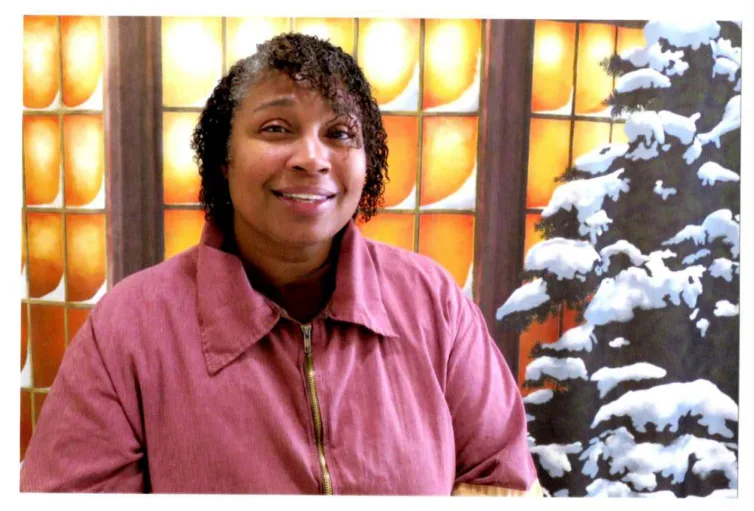
Ralph Bolden is 60 years old. He has spent most of his life behind bars.
In 1994, Bolden, then 28, was secretly struggling with his mental health. But admitting it would have gone against the tough guy image he felt he had to uphold on the street, where he spent his days hanging out, smoking marijuana, and occasionally fighting.
Months earlier, he had sought mental health care from a local hospital. Providers prescribed an antipsychotic medication. His memories of those medicated months remain elliptical. He felt as if he were always waking up in the middle of something, whether eating, using the bathroom, or in the middle of a conversation. Family members later told him that he spent at least twenty hours asleep every day. He stopped the medications, but the experience discouraged him from seeking further help.
Bolden was not in a gang, but friends in his neighborhood were. That June, after they were repeatedly attacked by rival gangs, he made a fatal decision to bring them guns to protect themselves. He decided to rob a gun store. During the robbery, he shot the two men who worked there, killing one.
“I don’t want to seem like I’m making any excuses for my behavior because what I did was wrong,” Bolden told The Appeal.
He was initially sentenced to death. Upon appeal, the Pennsylvania Supreme Court vacated his death sentence. He was resentenced to life without parole.
Even before his death sentence was vacated, he tutored men preparing for their GEDs. He co-founded a think tank, which invited people from the outside, including local law enforcement, to study and learn alongside incarcerated men. When he was transferred, he established another group in which men spoke directly to incarcerated youth. He also developed programs utilizing restorative justice to encourage men to examine the consequences of their actions on both their victims and their own loved ones.
He credits these changes to the words of his victim’s widow. Facing him at sentencing, she told him, “You didn’t kill one man. You killed my best friend. You killed the father of my children. You killed my husband.”
Her words propelled Bolden towards self-transformation. “I wanted to be better. Even if I have to die, I don’t want to die the way that I am,” he recalled. “That became my mantra.”
Bolden is one of more than 5,000 people, or 12 percent of Pennsylvania’s prison population, who are serving life without parole. Of those, one-third are, like Bolden, ages 55 or older.
In July, Pennsylvania’s five-person Board of Pardons will consider whether he should be allowed to pursue a commutation, or a shortening of his sentence, allowing him a second chance after more than 30 years behind bars. But this is only one step in Pennsylvania’s multi-step and years-long process, a process which, in the past 30 years, has granted half the number of second chances to lifers compared to previously. This has resulted in a drastic increase in the number of people now aging behind bars as they face years-long waits before they can make their case for a second chance; many die in prison without ever receiving an opportunity to appear before the Board of Pardons.
While 19 other states, including New York and California, allow the governor unilateral clemency power, Pennsylvania is among 10 states that require the approval of its pardon board. Without the board’s recommendation, the governor is barred from commuting a person’s sentence. Three members—a victim advocate, a corrections expert, and a medical or mental health expert—are nominated by the governor and approved by the state senate. The lieutenant governor and attorney general comprise the other two members.
Acknowledgment of an application can take up to 18 months. Only then does an applicant undergo an institutional review, including a psychological review as well as an interview with the prison superintendent. Former DOC secretary John Wetzel instituted the policy of interviewing applicants. His successors have continued the practice.
Then the process continues to a merit review. In 2026, the board scheduled three merit reviews for commutations. At each review, the board votes on hundreds of applications, reviewing the person’s institutional record, program participation, staff support, their personal statement, future plans, and letters supporting or opposing their release. For applicants serving life without parole, three of the five members must approve before they can proceed to a public hearing.
Before the public hearing, board members interview the applicant over Zoom. Each interview lasts no longer than 30 minutes. At the hearing, which is also virtual, family members of their victims as well as the applicant’s loved ones have the opportunity to testify.
Until the 1990s, an applicant needed a majority vote for commutation. Then, in 1994, however, Reginald McFadden, who had been granted commutation two years earlier, killed two people and raped a third. Recidivism among clemency recipients for any offense is extremely low. Nonetheless, his acts prompted widespread fears of second chances and a 1997 legislative change requiring a unanimous vote for all commutations. Between 1967 and 1994, over 360 life sentences had been commuted.
Since 1995, the board has reviewed 190 applicants serving life without parole. Of those, 80 (or fewer than half) were recommended to the governor. Seventy-eight have been granted commutation.
Celeste Trusty, now the state legislative affairs director for FAMM, served as secretary for the Pennsylvania Board of Pardons during previous governor Tom Wolf’s last year in office (December 2020 to January 2022). “It really does matter who’s in office, who’s on the board, what the public sentiment is about commutation [and] the political ambitions of the people involved in the process,” she told The Appeal. She noted that, because Wolf had no plans to run for higher office, “the political liability that people generally associate with second chances and clemency was removed, and he was able to boldly go forward.”
During Wolf’s two terms as governor, the board held 114 hearings for lifers and recommended 55. Wolf granted commutation to all of them.
As attorney general, Shapiro was a member of the pardon board. In 2019, he cast the fewest votes for commutation. Since becoming governor in 2023, the board has conducted 46 hearings for lifers and recommended 15 people. Shapiro granted commutation to all 15. (During his first term, Wolf granted commutation to 19 people, more than his past four predecessors combined.)
Bolden initially applied at his mother’s urging. The board denied his first two applications.
Since then, he has developed multiple sclerosis, which has progressed to the point where he requires a wheelchair. It also greatly limits the use of his left hand and causes constant pain.
This past March, Bolden learned that he received support from the Department of Corrections Secretary Laurel Harry. His merit review is scheduled for July 9. If approved, his public hearing will be on September 11.
“Little by little, I’m starting to have more hope,” he said. Decades behind bars, including four years with execution hanging over his head, made it impossible to envision a life beyond the prison door.
“The gravity and weight of prison is so hard to put into words,” he said.
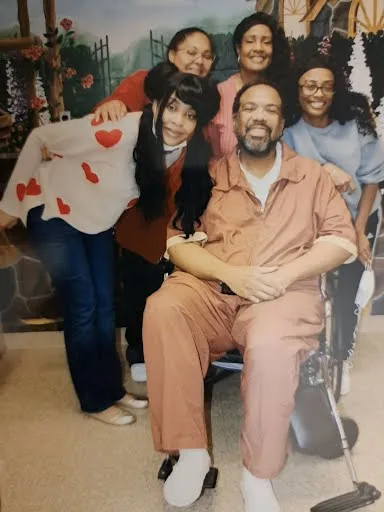
Last June, Shapiro granted commutation to 71-year-old Marie Scott, who was sentenced to life without parole after her boyfriend killed a gas station attendant during a 1973 robbery. Scott, who was 19 at the time, was released this past January after more than 52 years in prison.
Word of Scott’s clemency spread across Pennsylvania’s prison system. Bolden cried when he heard the news. “I was so happy for her,” he said. But her clemency also gave him hope that he might experience the world outside again. “I only had a smidgen of hope last time,” he said. “Now, I got so much hope.”
At SCI Muncy, Pennsylvania’s largest women’s prison, Scott’s commutation prompted celebration. It also made 53-year-old Sheena King more hopeful for a second chance. (In 2025, Law wrote the foreword to King’s memoir Submerged.)
King is also imprisoned on a life without parole sentence for first-degree murder.
Shortly after Valentine’s Day in 1991, King, then 18, began a relationship with a man named Reggie more than ten years older than her. He quickly became controlling and abusive.
King had already endured a lifetime of sexual, physical, and emotional abuse from multiple men in her life. Her father had molested her, her mother’s ex-boyfriend had repeatedly raped her, and her mother’s current boyfriend, who was addicted to crack cocaine, frequently assaulted family members. When they called 911, police either failed to respond or arrived long after he had fled.
“The only thing I knew was abuse, trauma, chaos, dysfunction,” she told The Appeal. She didn’t know how to recognize red flags. “It didn’t seem off. It seemed like a continuation of what life already was—you do what I say and don’t say anything,” she explained. “This is how you showed love.”
Three months into their relationship, he called, ranting that his ex-girlfriend had threatened to tell the police and the FBI about his crimes. He ordered King to shoot her.
When King refused, he threatened to kill her family. He had previously bragged about being a gang member, and her mother told her that cars had been waiting outside their house and her sisters’ schools, and trailing them when they were outside.
“I thought I was protecting my family,” King recalled in her commutation application. She took her mother’s gun, walked through the woman’s broken front door, and shot her in the face. “I did exactly as Reggie said because I didn’t know what else to do at that time.”
King was arrested and ultimately sentenced to life without parole. (Reggie was never arrested or prosecuted for the woman’s death.) Her age made her ineligible for resentencing under the Supreme Court’s Miller v. Alabama and Montgomery v. Louisiana decisions. Unlike New York, Illinois, California, and Oklahoma, Pennsylvania has no law allowing abuse survivors to petition for resentencing. Commutation is her only hope for rejoining her family.
This is her second time applying for clemency. The first time she applied, in 2019, she was interviewed by then-Secretary John Wetzel.
“It wasn’t his questions that I remember most,” she recalled. “It was what he said after I talked about my childhood and the crime that he viewed as a culmination of the events of my childhood.”
He told her that, at her hearing, she needed to talk about her childhood abuse.
“Talking about the abuse and your childhood helps them to understand how you got to the place where you walked in someone else’s home and shot her in the face,” she recalled him saying.
At the public hearing, however, the board’s questions focused on her crime, her time in prison, and her future plans, not her childhood or past abuse. She was denied and required to wait 12 months before reapplying.
In the ensuing seven years, King restarted a program in which those sentenced to life without parole mentored those newly starting similar sentences, began facilitating a childhood trauma group, and received both her bachelor’s and master’s degree. She also knows that she is no longer the scared and obedient woman she was when she was told to shoot a woman she had never met.
“I’ve healed from the abuse,” she said. “Fear is really debilitating. When you’re no longer living afraid because of abusive parents, molestation, and abusive partners, it is incredibly freeing.”
In 2024, she met Lieutenant Governor Austin Davis when he visited the prison to talk with women about trauma. He asked if she had filed for commutation and, learning that she had, said he would look at her application.
When Scott, who had been a mentor-like elder for King, received clemency, King started to feel more hopeful.
This April, King learned that she would receive the support of the prison’s superintendent. Now, she awaits a psychological assessment and an interview with the DOC secretary.
“Clemency isn’t about rehashing or relitigating [the conviction],” said Trusty. “It’s more about who they have become.”
King continues to mentor women who are starting lengthy and life sentences. Some of her early mentees have now become mentors, a fact that makes her feel “like a proud mother.” She wants to continue to help others. “There’s a world of girls that are in very similar situations. Having already lived it, maybe I can help prevent a situation like this one,” she said.
In his 32 years behind bars, Bolden has become someone who counsels others against reacting violently, no small feat in a prison environment. He recalls one instance in which he saw a man lacing up his boots and preparing to attack another man. “There was steam coming off his head,” Bolden remembered. Bolden stopped him, reminding him about his young son who was waiting for his father to come home. Last month, the man told him that he had been approved for parole, an approval he would not have gotten had he attacked someone else.
Now, Bolden is hoping that he might also have a second chance. “I’m getting better at being able to imagine having my own room in a nursing home, being able to go to my doctor’s appointments, go to the bathroom that has a door where I got some privacy, getting in the shower with a door with privacy,” he said. “I don’t think about anything bigger grand, just little things like that.”